Proactive vs. Predictive vs. Reactive

Updated: Nov 11, 2024
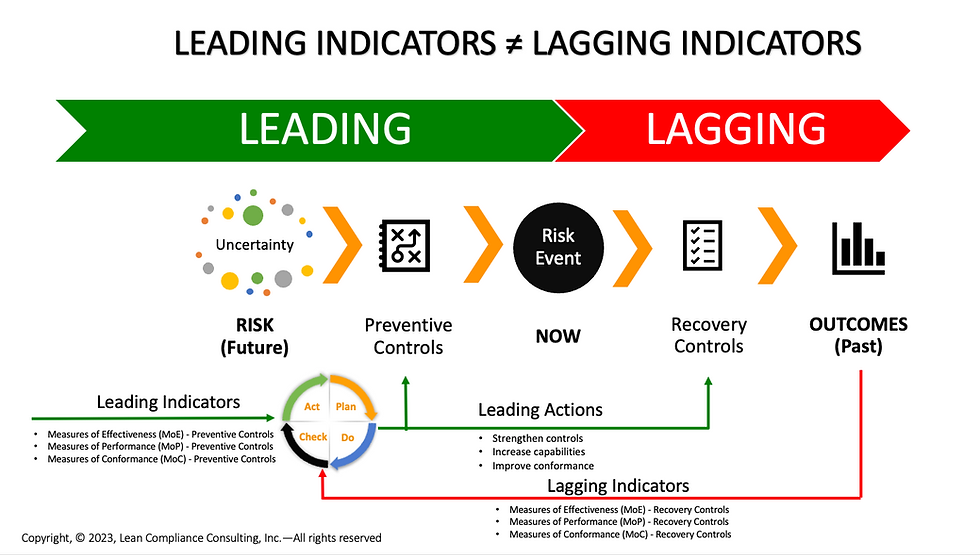
Predictive analytics is a topic of much discussion these days and is considered by some to be a proactive measure against safety, quality, environmental, and regulatory failure.
Predictive analytics can help to prevent a total failure if controls can respond fast enough and if the failure mode is predictive in the first place.
However, when uncertainty (the root cause of risk) is connected with natural variation (aleatory uncertainty) we cannot predict outcomes. Also, when uncertainty is due to a lack of knowledge (epistemic uncertainty) prediction is limited based on the strength of our models, experimentation, and the study of cause and effect.
Predictive analytics is not a substitute for effective risk management.
To properly contend with risk we must be proactive rather than only predictive. We need to estimate uncertainty (both aleatory and epistemic), its impacts, and the effectiveness of the controls we have put in place either to guard against failure (margins) or reduce its likelihood and severity (risk buy-down).